
Guide
Rolex Serial Number Lookup Guide
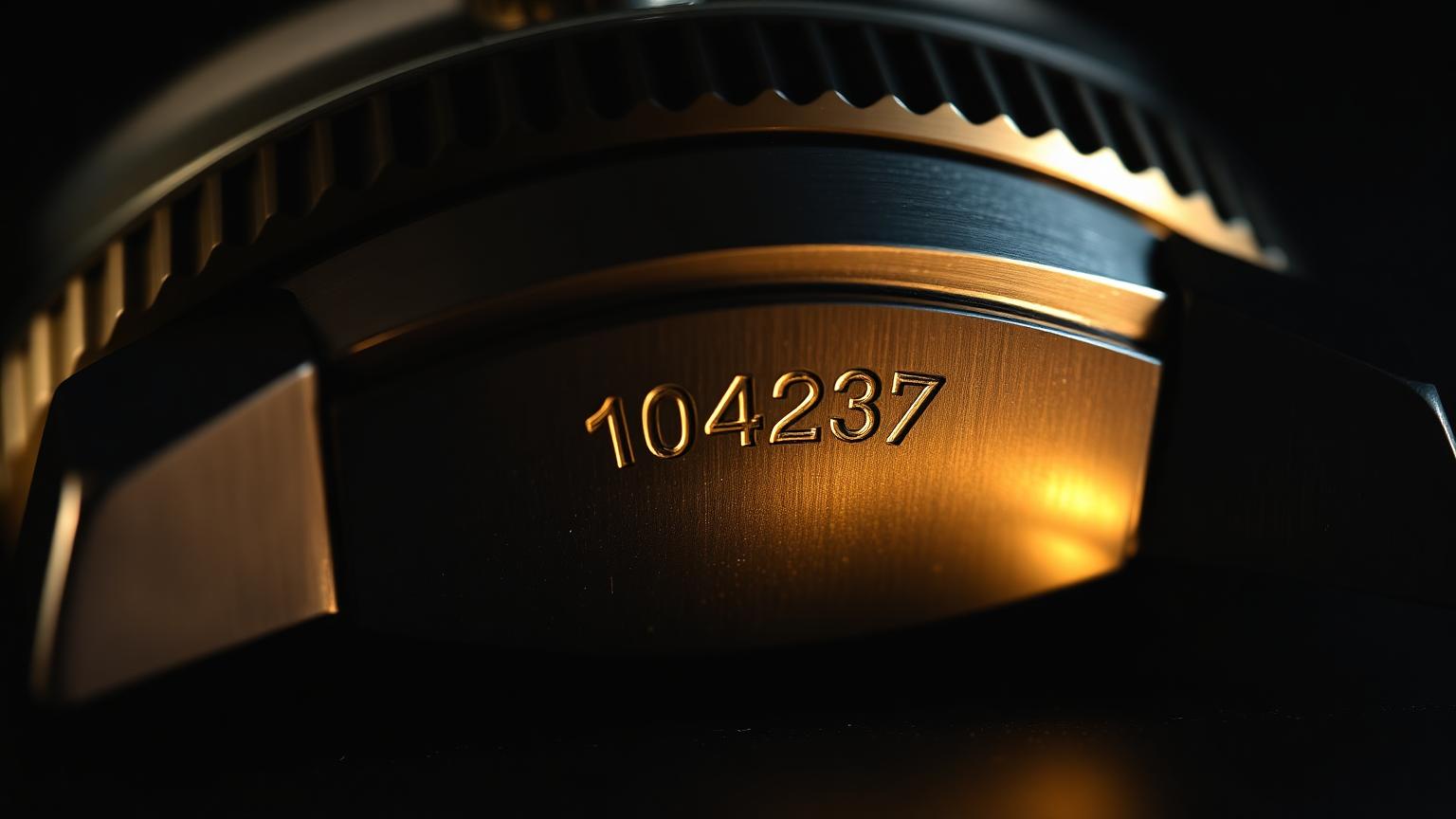
Every Rolex that leaves Geneva carries a serial number, a short string engraved into the metal that, for most of the brand's history, quietly tells you the year the case was made. As a dealer, it's the first thing I check on any watch that crosses my bench, because it's the fastest way to confirm a piece is honest before I ever get to price. This guide walks you through where to find your serial, how to read it, and just as important, what it can and can't tell you.
Where the serial number lives
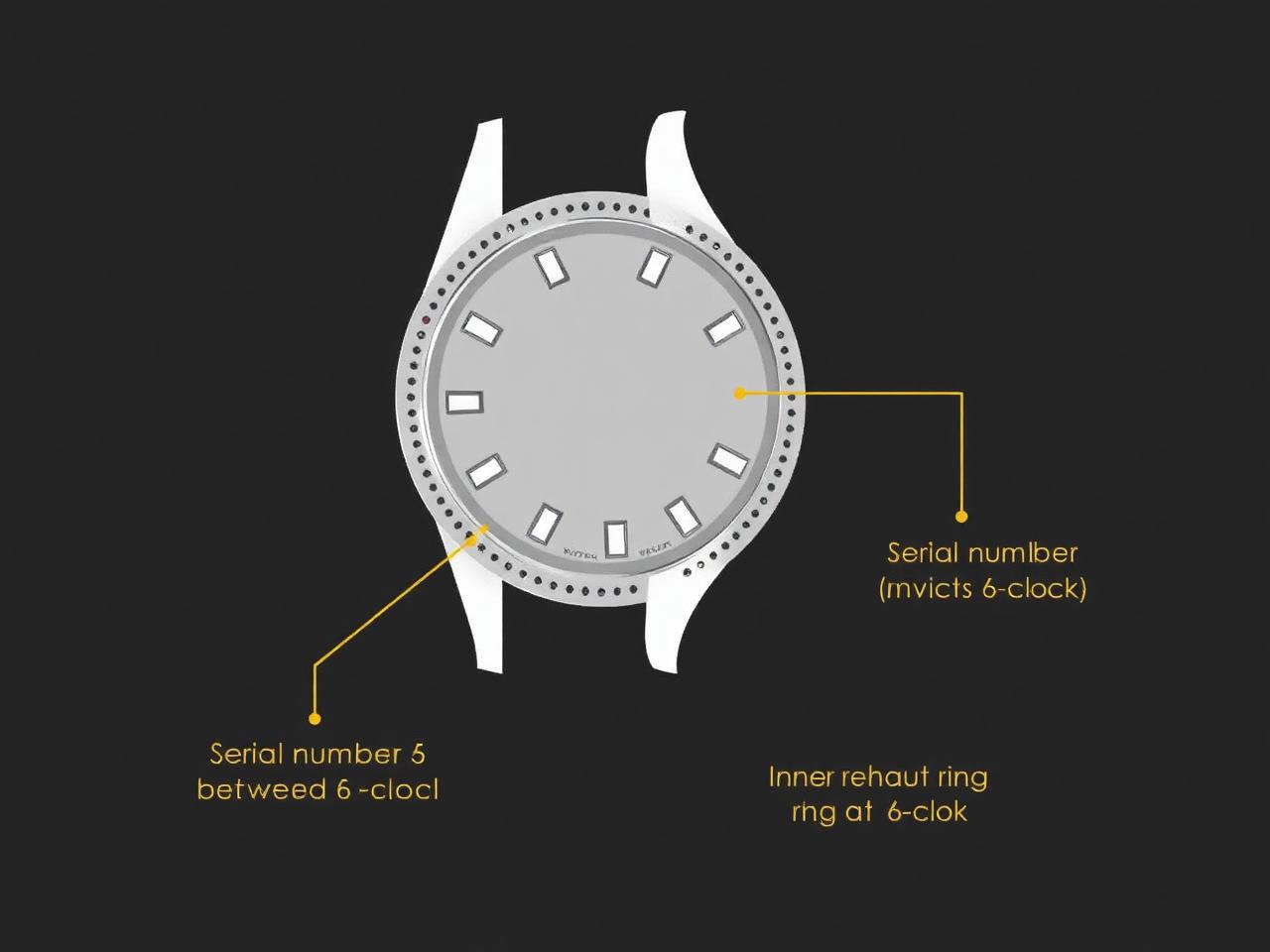
The location changed over the years, and knowing where to look is half the battle. Pre-2005: the serial is engraved between the lugs at the 6 o'clock side of the case. You have to remove the bracelet to see it, and I'd recommend letting a watchmaker do that, because a slipped spring-bar tool scratches the case and that damage costs you real money on resale. The reference (model) number sits opposite, between the lugs at 12 o'clock. 2005 to 2008: Rolex began engraving the serial a second time on the rehaut, the inner ring between the dial and the crystal, at 6 o'clock. Watches from this window often have it in both places, and the two should match. If they don't, walk away. 2008 onward: the serial moved exclusively to the rehaut, visible through the crystal without touching the bracelet.
The three serial systems
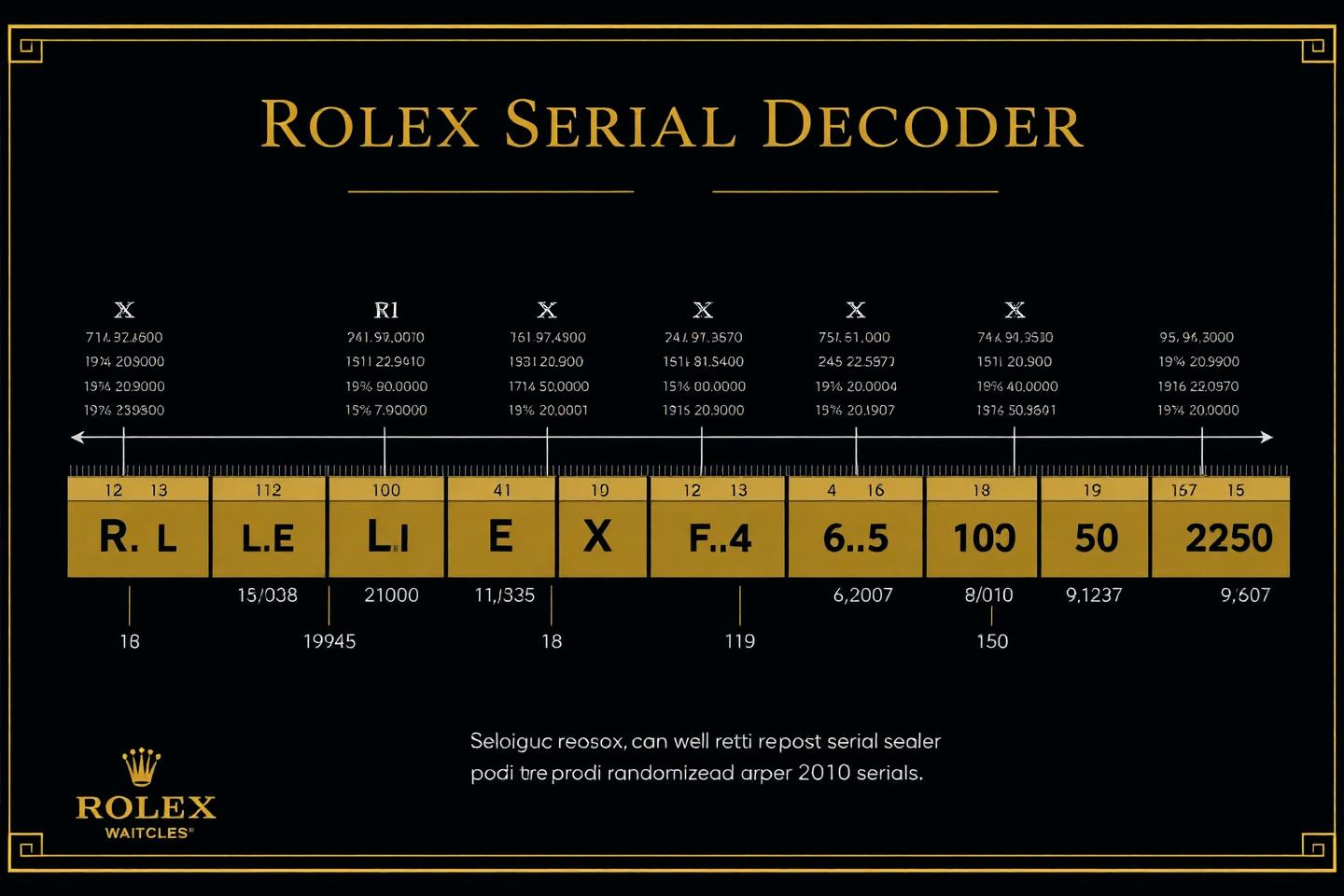
Rolex has used three fundamentally different numbering systems, and which one you're looking at determines whether you can date the watch at all. First, sequential numeric (1926 to 1987): a running number that climbed steadily upward. When it hit 999,999 in the early 1950s, Rolex reset to 100,000 rather than adding a seventh digit, which is why a watch from the early '60s can share a serial range with one from the '50s. Second, letter-prefix (1987 to 2010): a single letter followed by six digits. Tellingly, they didn't start at A, they began with R, L, E, X, spelling ROLEX (minus the O), then moved through a non-sequential run of other letters. Rolex never issued serials beginning with B, I, J, O, or Q, those were reserved for Tudor. Third, random or scrambled (2010 to present): a fully randomized eight-character serial with no chronological pattern (something like OT23Q258). You cannot date a modern Rolex from the serial alone. For these, the warranty card is the only reliable source for the exact date.
Serial-to-year quick reference
This chart is compiled from collector data. Rolex has never released official records, so treat every date as approximate (typically accurate within 1 to 2 years). Key ranges: 3,000,000 = 1972; 5,000,000 = 1977; 6,000,000 = 1980; 8,000,000 = 1984. Letter prefixes: R (1987 to 88), L (1989 to 90), E (1990 to 91), X (1991), N (1991), S (1993 to 94), W (1994 to 95), T (1996), U (1997 to 98), A (1998 to 99), P (2000), K (2001 to 02), Y (2002 to 03), F (2003 to 04), D (2005), Z (2006 to 07), M (2007 to 08), V (2008 to 09), G (2010 to 11). Random 8-character serials (2011 to present) cannot be decoded.
How to decode a reference number too
While you're between the lugs, decode the reference at 12 o'clock, it tells you the model, bezel, and case metal. On a five-digit reference, the first three digits are the model, the fourth is the bezel type, and the fifth is the case material. Example: 16234 breaks down as Datejust (162) plus fluted bezel (3) plus steel with 18k white gold (4). Trailing letters add detail, on a Submariner 116613LB, LB tells you blue bezel and blue dial. Four-digit vintage references don't always follow this logic.
What the serial does, and doesn't, tell you
Here's where experience matters. A serial number dates the case, not the whole watch. On vintage pieces especially, you'll find a case from 1985 wearing a dial and bezel that were swapped in during a 1995 service. That's not fraud, it's a serviced watch, but it changes what you're buying. A serial is a dating tool, not an authentication tool. Fakes carry serials too, often reused across multiple counterfeits. The most valuable thing a serial gives you is a consistency check: does the number fit the era of the reference, the dial, the bracelet, and the papers? When all of those line up, you have a coherent watch. When one doesn't, you have a question that needs answering before any money changes hands.
The bottom line
For anything made before 2010, the serial is a reliable one-to-two-year dating tool once you know where to look and which system applies. For anything newer, the warranty card is king, and a full set (box, card, manuals) can add roughly 20% to a watch's value, so treat that green card as part of the asset. When in doubt, a professional authentication runs $50 to $200 and is cheap insurance on a four-or-five-figure purchase.